 Verdant stock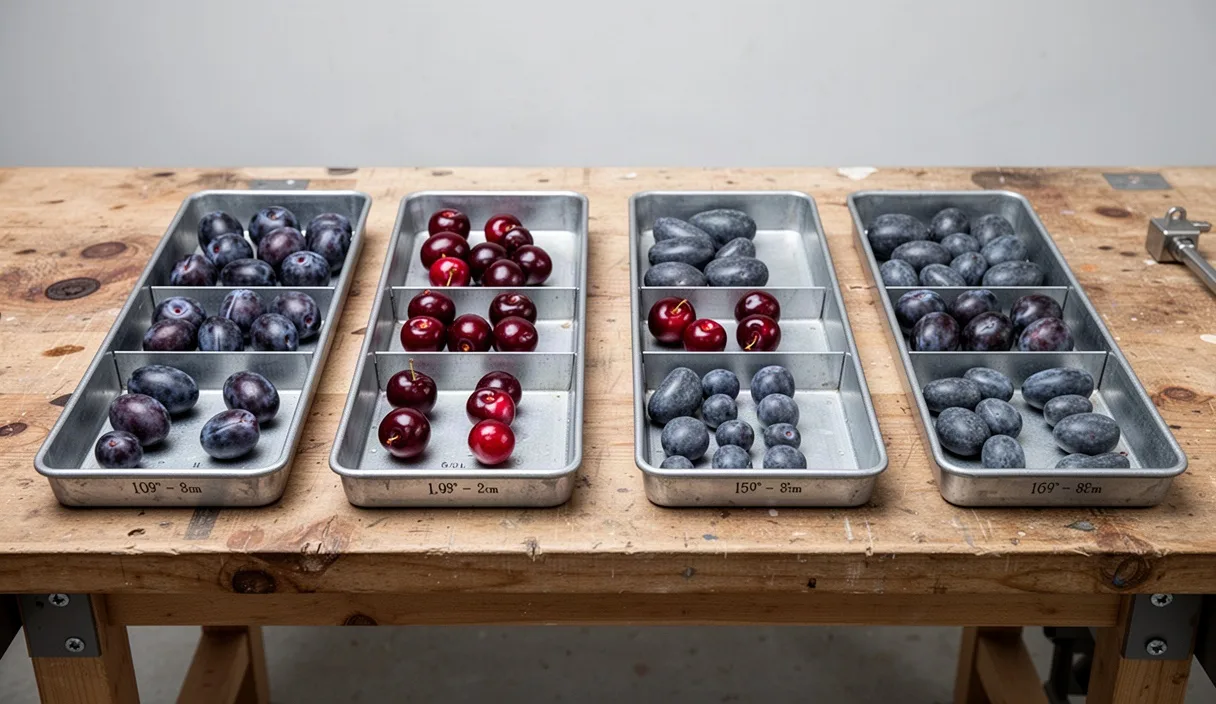

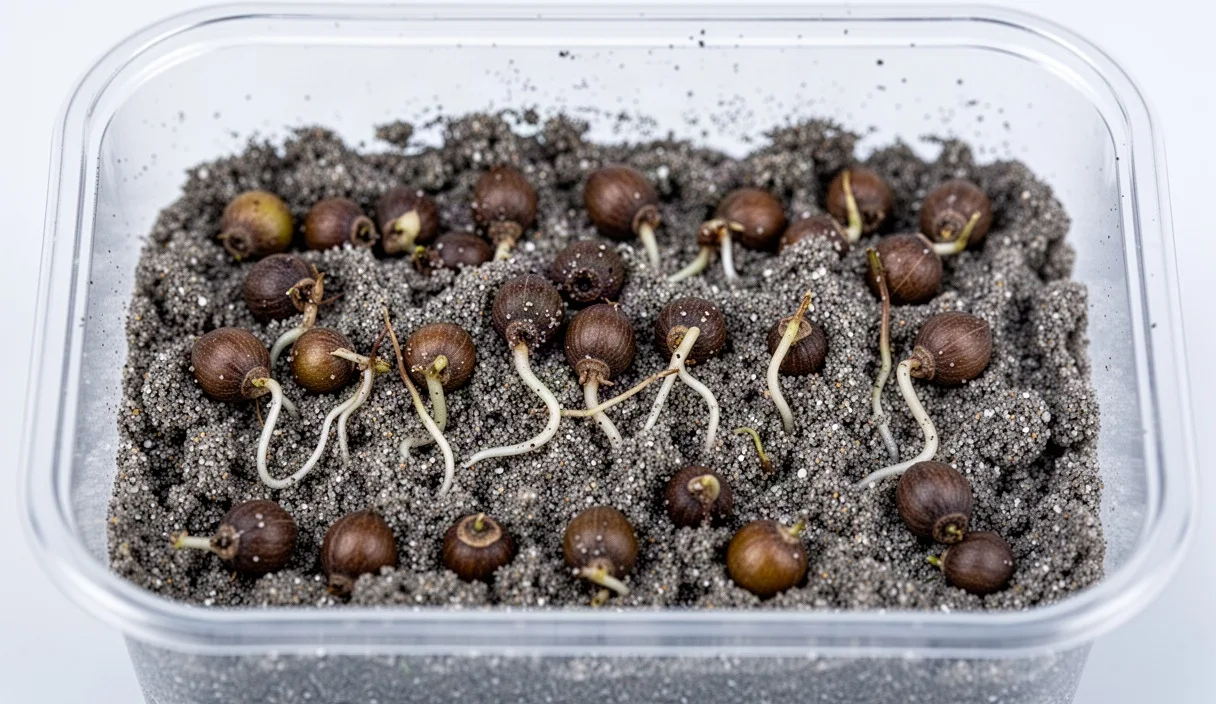
In commercial stone fruit propagation, erratic seedling emergence complicates field grafting schedules and increases nursery management costs. Seeds of the genus Prunus, which include peaches, plums, cherries, and almonds, are encased in a heavily lignified endocarp, commonly called the pit or stone. Natural variation in the thickness of this woody shell, combined with differences in embryo development, creates wide variance in the time required for moisture penetration, chilling accumulation, and physical shell rupture. Left uncalibrated, a single seed lot can emerge over an interval of six to nine weeks, producing an uneven stand that requires staggered budding operations.
Calibration is the mechanical and physical grading of cleaned stone fruit pits into narrow, standardized categories based on exterior dimensions, weight, and density before stratification begins. Stratification is the process of subjecting moist seeds to cold temperatures to break physiological dormancy. By sorting pits into uniform cohorts prior to chilling, nurseries can standardize moisture absorption rates and ensure that the chilling requirement is met uniformly across the population. This documentation details the baseline metrics, mechanical sieving procedures, density testing parameters, and storage moisture requirements necessary to produce uniform seed germination in professional nursery systems.
Diameter and Weight Baselines for Prunus Seed
Physical dimensions of the endocarp directly influence the duration of water uptake and the physical resistance the expanding embryo must overcome. In any harvest of rootstock seed, pit diameter follows a normal distribution curve. Measuring both the cheek diameter (the widest plane perpendicular to the suture line) and the suture diameter establishes the baseline for sorting screens. Pits falling into the lowest 12% to 16% of the mass spectrum frequently contain underdeveloped or desiccated embryos that lack the metabolic vigor required for sustained seedling growth.
Weight baselines should be calculated using the dry mass of 100 randomly sampled pits taken from a fully cured lot. Measuring mass in bulk allows propagation managers to evaluate kernel fill without breaking open viable seed. If the 100-seed mass deviates downward by more than 18% from the species mean, the lot typically contains high levels of blind pits (stones lacking fully formed seeds) or split-pit air cavities. Baseline specifications vary significantly across primary rootstock species due to differences in endocarp density and geometry.
| Rootstock Species | Common Name or Cultivar | Mean Cheek Diameter (mm) | 100-Seed Clean Mass (g) | Target Rejection Threshold (by mass) |
|---|---|---|---|---|
| Prunus persica | Lovell, Nemaguard | 21.5 - 26.0 | 380 - 460 | Lowest 14% |
| Prunus cerasifera | Myrobalan 29C | 11.0 - 14.5 | 75 - 110 | Lowest 12% |
| Prunus avium | Mazzard | 9.0 - 12.0 | 48 - 62 | Lowest 15% |
| Prunus dulcis | Titan, Bitter Almond | 18.0 - 23.5 | 260 - 320 | Lowest 13% |
| Prunus bespoke hybrids | Citation, Krymsk 86 | 14.0 - 18.0 | 140 - 190 | Lowest 16% |
When establishing lot profiles, evaluate seeds with precision dial calipers rather than optical approximations. Suture width must be documented alongside cheek width because asymmetrical pits can jam processing equipment or drop prematurely through vibrating sieves. If more than 22% of a sample falls outside two standard deviations of the median cheek diameter, the lot should be divided into three distinct size fractions (small, medium, and large) rather than processed as a single continuous line. Each fraction will require separate stratification timing to reach peak germination simultaneously.
Mechanized Sorting Versus Hand Sieve Screens
Separating pits by size can be accomplished through manual screen sets or continuous-flow mechanized riddle separators. The choice between these methods depends on seed volume, labor availability, and the degree of dimensional variance within the harvest. Hand sieve screens constructed from punched sheet metal or brass wire cloth are ideal for lots under 70 kilograms and for conducting initial lot evaluations. Mechanized rotary screens and eccentric vibrating decks are required to process commercial volumes exceeding several hundred kilograms per day.
Screen geometry dictates sorting efficiency. Round-hole screens select strictly for the maximum cross-sectional width of the pit, which corresponds to the cheek dimension in most Prunus species. Slotted screens, by contrast, isolate flat, misshapen, or hollow pits that exhibit standard width but deficient thickness across the suture. For thorough calibration, a two-stage screening process is recommended: first passing the lot over a slotted screen to discard thin, underdeveloped stones, followed by a series of round-hole decks to categorize the remaining seed into uniform size grades.
- Hand Screen Protocols: Nested brass or galvanized steel riddles ranging from 8/64-inch to 28/64-inch increments. Shake each charge of 2 to 3 kilograms with an orbital motion for 45 to 60 seconds. Empty screens promptly when flow slows to prevent blinding of the perforations.
- Vibratory Deck Parameters: Set deck inclination between 4 and 6 degrees downward from the hopper feed. Set the eccentric vibration speed between 280 and 340 cycles per minute. An excessively fast vibration cycle bounces pits over screen openings without allowing sufficient dwell time for dimensional sorting.
- Rotary Drum (Trommel) Specifications: Utilize a cylinder rotating at 14 to 18 revolutions per minute with an internal slope of 3 degrees. Ensure screen sections transition from small perforations at the feed end to larger perforations near the discharge chute to avoid dropping large pits into small-diameter collection bins.
Screen selection must match the specific fruit cultivar. For example, peach rootstocks such as Lovell generally require round-hole screens measuring 22/64 inch, 24/64 inch, and 26/64 inch. In contrast, Prunus cerasifera requires smaller screens, typically between 12/64 inch and 15/64 inch. Inspect screens every 4 operating hours for wedged stones, which degrade sorting precision by altering the functional opening size of the sieve plates.
Floatation Density Testing in Pure Water
Sizing separates pits geometrically, but it cannot verify internal embryo density. Floatation density testing exploits the buoyancy differential between a pit containing a fully hydrated, solid endosperm and embryo, and a pit containing an aborted kernel, internal rot, or excessive internal air space. Pits with a density less than 1.00 gram per cubic centimeter float on the surface of plain water, while viable, well-formed seeds sink.
Conduct density separation using potable water held at temperatures between 15 and 20 degrees Celsius. Water below 10 degrees Celsius increases liquid viscosity slightly, which can slow the settling of borderline pits, while water above 25 degrees Celsius accelerates microbial respiration and can trigger premature fermentation of residual pulp. The dwell time must be kept strictly between 15 and 25 minutes. If stones remain submerged for several hours, water penetrates the porous endocarp of hollow pits through the vascular trace at the base, causing unviable seeds to sink and contaminating the accepted seed population.
- Fill the Separation Tank: Fill a steep-sided plastic or stainless steel tank with clean, untreated water to roughly two-thirds capacity, ensuring adequate depth for separation.
- Introduce the Seed Charge: Pour sized pits slowly into the water column, limiting volume to no more than 1 kilogram of seed per 4 liters of water to avoid mechanical bridging at the surface.
- Agitate Thoroughly: Stir the mixture with a clean plastic paddle for 90 seconds to detach adhering air bubbles from the rugose surface of the endocarps. Surface tension can hold viable seeds at the surface if micro-bubbles remain attached to pit indentations.
- Quiescent Separation: Allow the bath to settle undisturbed for 12 to 15 minutes. Heavy, sound seeds will form a dense layer at the bottom of the vessel.
- Skim Floaters: Use a perforated skimmer to collect all surface materials and suspended debris. Weigh and record the culled mass. Discard floaters or split a sub-sample to verify that embryos were absent or necrotic.
- Extract and Drain Sinkers: Drain the bottom layer of sinkers immediately onto wire mesh racks to evacuate surface moisture. Do not allow pits to rest in static standing water once separation is complete.
The discard proportion for floatation typically ranges from 7% to 19% in commercial practice. If floatation yields cull rates exceeding 32%, the lot may have suffered from severe drought stress during kernel filling, early frost before complete maturation, or significant insect predation by plum curculio or seed chalcids. Consult a seed testing specialist or perform a destructive cut test before rejecting lots that fall just outside acceptable parameters.
Moisture Content Requirements Prior to Cold Storage
Precise moisture control following floatation testing determines whether seed will maintain viability during cold dry storage or undergo early deterioration. Prunus seeds are classified as orthodox, meaning they tolerate desiccation to low moisture levels. However, storing them either too wet or too dry impairs shelf life and delays emergence. If stored dry prior to stratification, whole-pit moisture must equilibrate between 11% and 14% on a fresh-weight basis.
Moisture content should be measured using standard laboratory oven drying. Crush a representative sample of 20 pits to break the outer lignified shell, weigh the sample to within 0.01 gram, and dry it at 103 degrees Celsius for 17 hours in a forced-air drying oven. Calculate moisture content using the formula: ((Fresh Weight - Dry Weight) / Fresh Weight) * 100. Rapid benchtop moisture meters calibrated for cereal grains produce erratic readings on whole stone fruit pits due to irregular endocarp density and should not be used for critical nursery inventory decisions.
If pits are moving directly into cold stratification rather than dry storage, they must be brought to full imbibition. This requires soaking the calibrated sinker pits in aerated water for 24 to 48 hours until total seed mass increases by 26% to 34%, depending on the species. The internal embryo must reach a hydration level of at least 28% to activate the metabolic pathways that register cold chilling units. Aeration during this soaking stage is mandatory; static water quickly becomes depleted of dissolved oxygen, leading to anaerobic respiration and embryo death within 36 hours.
Documenting Lot Variability in Nursery Records
Systematic tracking of seed lots links physical calibration metrics directly to nursery stand uniformity and subsequent budding success. Record every lot using a unique identification number that follows the seed from harvest through stratification to the field block. Nursery software or physical logbooks must capture baseline physical metrics alongside biological viability indicators.
| Logbook Parameter | Measurement Unit | Target Tolerance | Operational Impact |
|---|---|---|---|
| Screen Sizing Yield | Kilograms per screen size | Target grade: 65% to 80% | Determines planter plate setups and seed drill spacing |
| Floatation Cull Rate | Percentage of total raw mass | Below 16% | Identifies weak seed collections or pest damage |
| Pre-Stratification Moisture | Percentage fresh weight | 11.5% - 13.5% dry storage | Prevents mold proliferation or desiccation injury |
| Embryo Fill (Cut Test) | Sound kernels per 100 seeds | Minimum 88 sound kernels | Adjusts field seeding rate per linear meter |
| Stratification Start Date | Calendar date and time | Fixed per variety schedule | Calculates chilling hour accumulation (1 to 4 C) |
When entering cut test results, document not only the presence of an embryo, but its physiological condition. Note the color of the cotyledons, the presence of internal browning, and whether the kernel fills the endocarp cavity completely. Retain a voucher sample of 200 calibrated seeds from each 500-kilogram lot, storing them in sealed moisture-proof foil bags at 2 degrees Celsius for two seasons. This sample serves as a physical control reference if emergence rates in the field diverge significantly from historical nursery performance baselines.
Common Mistakes
- Over-soaking during density sorting: Leaving seeds in the floatation tank beyond 30 minutes allows hollow, dead seeds to take on water and sink, which contaminates the viable seed lot with non-germinable material.
- Stratifying mixed-diameter populations: Placing small and large pits into the same stratification tote results in asynchronous germination. Thinner endocarps absorb water and satisfy chilling requirements up to 20 days faster than thick endocarps of the same species.
- Inadequate agitation during float tests: Failing to briskly stir pits upon introduction to the water tank traps micro-bubbles in the surface crevices of the endocarp, causing heavy, viable pits to float and be discarded erroneously.
- Relying entirely on grain moisture meters: Using uncalibrated electronic meters designed for thin-hulled crops to measure thick, woody stone fruit pits produces inaccurate data, leading to storage mold outbreaks or seed desiccation.
- Neglecting sieve plate maintenance: Allowing chipped pit fragments to remain lodged in mechanical screen perforations changes the sorting profile, resulting in inaccurate sizing and broad germination windows.
Next Steps for Lot Calibration
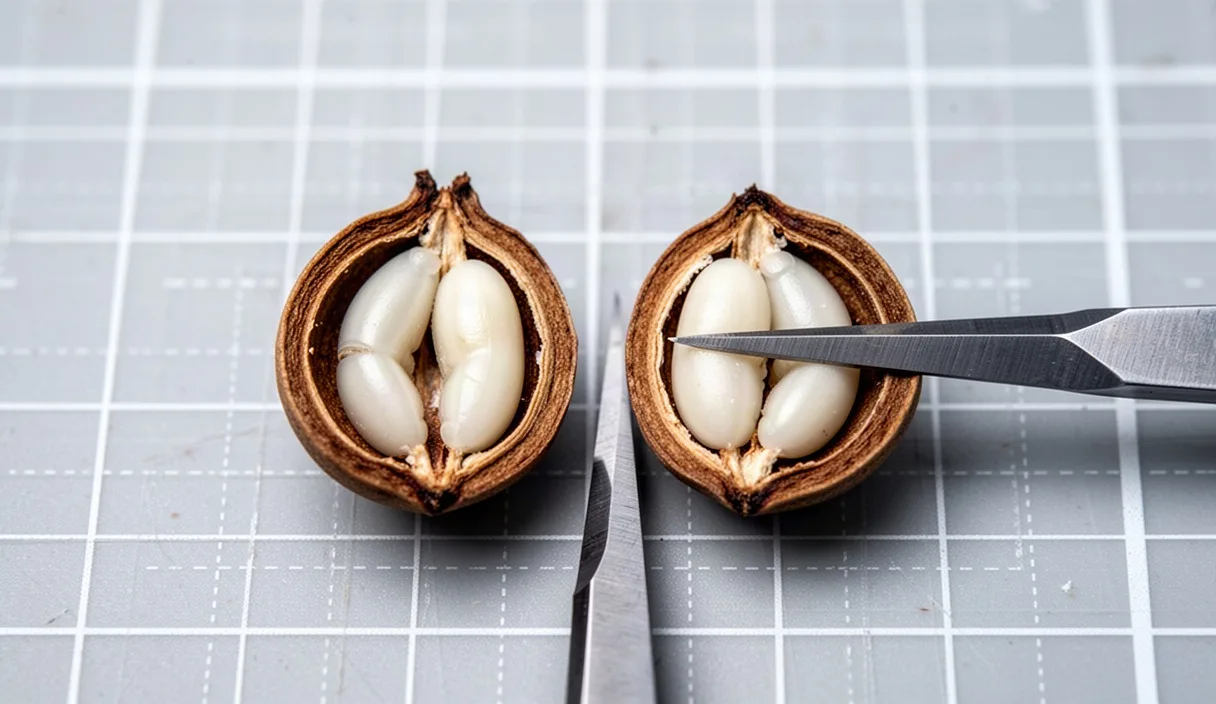
To implement a standardized pit calibration program for incoming harvests, begin by drawing representative samples from each raw lot according to International Seed Testing Association protocols. Take sub-samples from the top, middle, and bottom of storage totes, combining them to form a composite sample of at least 500 pits. Run a 100-seed cut test immediately to confirm basic embryo viability before dedicating labor and machine time to physical cleaning and sizing runs.
Once viability is verified, pass the harvest through slotted screens to eliminate damaged or flat seed, followed by round-hole screens to isolate the primary size cohort. Route the primary cohort directly into the floatation tank for density purification, keeping cycle times strictly under 25 minutes. Surface-dry the accepted sinkers on screened drying racks equipped with high-volume axial fans. Once surface dry, take moisture readings to determine whether the seed requires further dehydration for cold storage or continuous aeration for immediate pre-stratification soaking. Log all sizing splits, float percentages, and moisture measurements in the central nursery database before moving containers into climate-controlled refrigeration.