 Verdant stock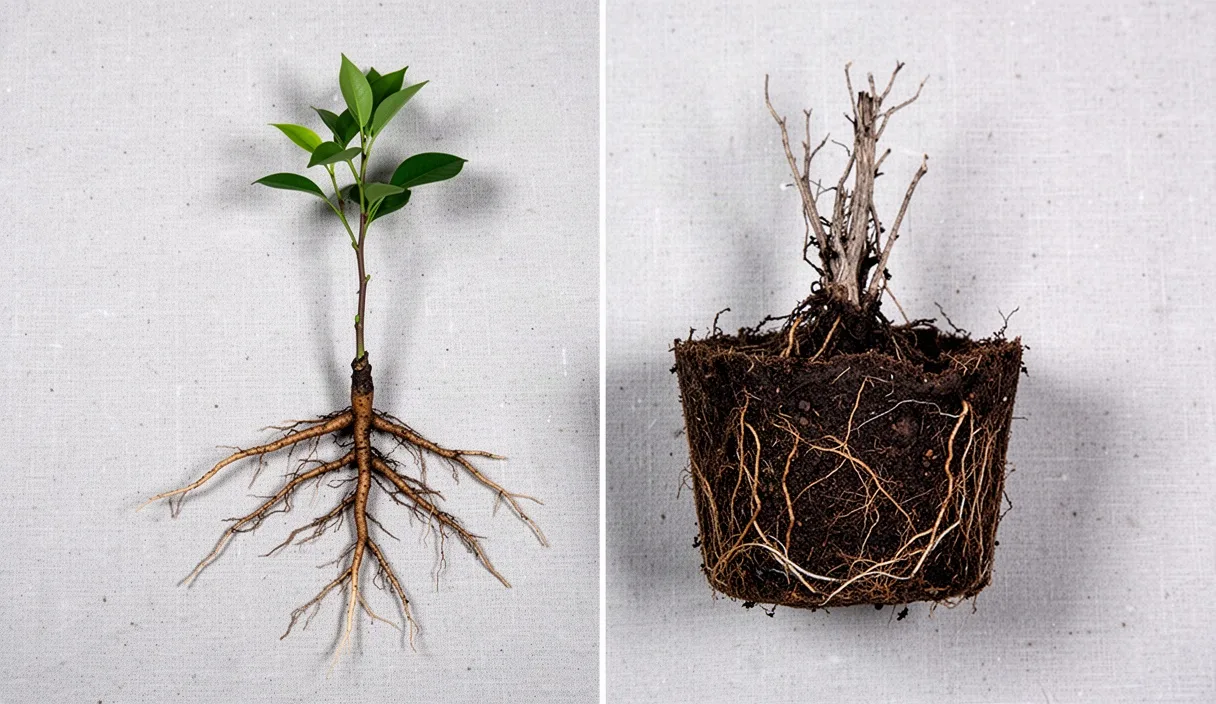

Establishing an orchard requires selecting stock formats that balance immediate survival against long-term operational costs. Fruit and nut trees are supplied primarily in two configurations: dormant bare-root stock dug directly from field nursery beds, and container-grown (or potted) stock raised in soilless substrate within plastic or fabric containers. Each format carries distinct physiological traits, handling tolerances, and root system characteristics that directly determine post-transplant establishment rates.
Establishment rate refers to the percentage of transplanted trees that resume active vegetative growth, anchor structurally in the native soil, and maintain positive water relations through the first three growing seasons. Choosing between bare-root and potted stock is not merely a logistical decision; it establishes how quickly the root system integrates with the surrounding soil profile and how vulnerable the young tree will be to moisture stress, frost heave, and physical girdling during early development.
Root Architecture Differences in Field Trials
Field excavation trials demonstrate clear architectural disparities between bare-root and potted stock at the point of planting and throughout the first 24 months in the ground. When field-grown bare-root trees are harvested during dormancy, an undercut blade severs the deepest taproots and distal lateral roots at depths between 25 and 35 centimeters. Despite this tissue loss, the primary lateral scaffold roots retain their natural radial orientation. When planted into orchard rows, these laterals continue outward horizontally and diagonally, penetrating native soil without unnatural directional changes.
Container-grown trees preserve their entire root mass within the pot volume, but the container walls force lateral roots to deflect. In standard smooth-walled nursery pots, roots contact the wall and circle the periphery, creating a dense outer cage. If planted without aggressive mechanical root disruption, these circling roots continue their circumferential trajectory rather than branching outward into the native backfill. Over three to five seasons, this pattern can lead to root girdling, which constricts vascular transport in the lower trunk and reduces physical anchoring against high winds.
The interface between nursery substrate and native field soil creates a physical barrier known as a textural boundary. Potted trees arrive in high-porosity media, typically composed of aged pine bark, peat moss, and perlite. This substrate exhibits high hydraulic conductivity when fully saturated, but rapidly loses water to surrounding finer-textured soils, such as silt loams or clay loams, through matric potential gradients. As a consequence, roots inside the container core can suffer drought stress even while adjacent native soil remains moist. Bare-root trees, placed directly into native backfill, bypass this substrate interface, allowing direct contact between soil particles and emerging root hairs.
Excavations conducted 18 months post-transplant show distinct root distribution zones:
- Bare-root systems: New lateral root extension averages 42 to 68 centimeters beyond the initial root zone, with fine root hairs distributing uniformly through the native backfill.
- Potted systems without root manipulation: Approximately 73% of total root mass remains confined within the dimensions of the original container core.
- Potted systems with mechanical scoring: Lateral roots break the pot-bound pattern, extending 31 to 49 centimeters outward, though total root volume lags behind undisturbed bare-root branching.
Moisture Vulnerability During Transport and Staging
The absence of an insulated root ball makes bare-root trees acutely susceptible to desiccation during transport, staging, and planting operations. Fine feeder roots, which measure less than 2 millimeters in diameter, lack a protective bark layer and can lose functional viability after as little as 10 to 15 minutes of exposure to ambient air at low relative humidity. Once feeder roots desiccate, the tree must mobilize stored carbohydrate reserves to regenerate absorbing tissue before it can uptake water, delaying bud break and shoot extension.
To mitigate moisture loss, bare-root stock requires continuous protection. Commercial nurseries package bare-root bundles in polyethylene-lined paper bags or wooden crates filled with damp wood shavings, sphagnum moss, or synthetic hydrogels. During transit and staging, relative humidity inside the packaging must be maintained above 85%, and storage temperatures should stay between 1.5 and 4.5 degrees Celsius to suppress respiration and premature dormancy break. If planting is delayed by field conditions, growers must heel the trees into shallow trenches of moist sawdust or soil, or place them in cold storage.
Container-grown trees offer greater handling buffering because the potting medium insulates and hydrates the root system. A fully watered 10-liter container holds enough moisture to sustain an unplanted, dormant tree for 5 to 9 days under temperate staging conditions. Even after bud break, container media provides a reservoir that protects the tree from sudden wind or solar drying during field layout. However, this protection creates a false sense of security; if the container root ball dries out completely, re-wetting the dense peat-bark core requires sustained drip irrigation or submersion, as water often channels down the sides of the dry pot rather than penetrating the interior.
Planting Season Windows by Regional Frost Dates
The physiological status of the stock determines the calendar window during which planting can proceed safely. Bare-root trees must be planted strictly while dormant, setting rigid planting schedules dictated by local frost dates and soil conditions.
| USDA Plant Hardiness Zone | Bare-Root Planting Window | Container Planting Window | Soil Temperature Baseline |
|---|---|---|---|
| Zones 4 to 5 | Early April to early May | Late April to late June | 4.0 to 7.0 degrees Celsius |
| Zones 6 to 7 | Late February to late March | Early March to mid-June | 5.5 to 8.5 degrees Celsius |
| Zones 8 to 9 | December to early February | November to early May | 8.0 to 12.0 degrees Celsius |
In colder northern zones (Zones 4 to 5), bare-root trees must enter the ground immediately after the spring frost thaw, as soon as the soil is workable and before ambient temperatures induce bud swell. Planting into frozen soil is impossible, while planting after bud break leads to rapid moisture depletion through emerging foliage before root contact is established. If prolonged spring rains delay field access with heavy equipment, bare-root stock can break dormancy in storage, significantly lowering survival rates.
In warmer southern regions (Zones 8 to 9), bare-root planting occurs during the late autumn or midwinter months. This timing allows the root system to initiate new root tips throughout the winter dormancy period, as subterranean soil temperatures remain above the minimum threshold for root growth (approximately 5.0 degrees Celsius for most deciduous pomes and stone fruits) long before atmospheric temperatures trigger leaf flush.
Container-grown stock permits a broader planting schedule. Because the root system is intact and operational within its substrate, potted trees can be planted from early spring through early summer, and even during early autumn, provided supplemental irrigation is installed before planting. The primary limiting factor for late-season container planting is midsummer heat, which elevates transpiration rates beyond what the establishing root mass can absorb from native soil.
Initial Labor and Shipping Weight Comparisons
Logistical and labor expenditures differ sharply between bare-root and potted nursery formats. These differences manifest across freight shipping, field distribution, digging specifications, and mechanical handling requirements.
| Operational Metric | Bare-Root (1,000 units, 15-18 mm caliper) | Potted (1,000 units, 10-liter containers) |
|---|---|---|
| Total Freight Weight | 450 to 800 kilograms | 8,500 to 11,500 kilograms |
| Freight Space Required | 2 to 4 pallets (standard truck bed space) | 1 full commercial 16-meter trailer |
| Planting Hole Diameter | 30 to 45 centimeters | 50 to 60 centimeters |
| Average Planting Rate per Person-Hour | 22 to 38 trees | 9 to 16 trees |
Shipping weight represents a major cost differential. A bundle of 10 bare-root apple or peach whips weighs roughly 5 to 8 kilograms, depending on root size and packing moisture. Conversely, 10 container-grown trees of identical caliper, complete with saturated substrate and plastic pots, weigh between 85 and 115 kilograms. Consequently, a single flatbed freight truck can transport up to 12,000 bare-root whips, but rarely holds more than 1,200 to 1,500 ten-liter containers before reaching legal axle-weight or volume limits.
Labor efficiency at planting mirrors this freight difference. Planting bare-root stock requires opening a hole only wide enough to accommodate the natural spread of lateral roots without bending them, and deep enough to set the graft union 7 to 10 centimeters above the final soil grade. Workers can distribute bare-root trees by hand across orchard blocks using wet burlap bags or hydrogel buckets. Two-person crews can set, backfill, and tamp 45 to 70 bare-root trees per hour when working behind a mechanical subsoiler or tractor-mounted auger.
Container planting demands greater soil excavation and manual processing. The planting hole must be dug twice as wide as the pot diameter to encourage lateral root penetration across the boundary zone. Each container must be stripped from the root ball, inspected, and mechanically scored: a worker must use a pruning knife or hand shears to make three to four vertical slices 1 to 2 centimeters deep along the sides of the root ball, followed by slicing across the base to sever circling roots. This process slows installation rates to 18 to 32 trees per two-person crew hour, noticeably increasing initial field labor expenses.
Survival Data Recorded Over Three Growing Seasons
Longitudinal data collected from orchard trials across temperate growing regions highlight the survival trajectory of each format. The figures below reflect a multi-site trial tracking 2,400 fruit trees (equal proportions of Malus domestica and Prunus persica) grown under drip irrigation across silt loam and sandy clay loam sites over three continuous growing seasons.
| Timepoint | Bare-Root Survival Rate | Potted (Scored) Survival Rate | Potted (Unscored) Survival Rate |
|---|---|---|---|
| End of Year 1 | 91.4% | 94.8% | 88.6% |
| End of Year 2 | 89.7% | 92.1% | 81.3% |
| End of Year 3 | 88.9% | 89.6% | 73.2% |
During Year 1, properly handled and scored container trees demonstrated a modest survival advantage over bare-root stock (94.8% versus 91.4%). This advantage stemmed directly from the intact root system of the container trees, which supported continuous water uptake immediately following bud break. The bare-root cohort experienced its primary losses within the first 60 days of the growing season, primarily due to desiccation during planting or failure of damaged root systems to generate sufficient hydraulic pressure before the onset of summer heat.
By Year 2, the mortality curve for bare-root stock flattened. Trees that survived the initial summer developed deep, functional root frameworks and grew robustly, showing annual trunk caliper increases averaging 11.2 millimeters. The potted cohort that underwent mechanical root scoring retained stable survival rates, though annual caliper growth averaged 9.8 millimeters, slightly lower than that of the bare-root group.
The unscored potted cohort experienced ongoing, progressive mortality through Year 2 and Year 3. Although these trees leafed out vigorously in their first season, their roots remained largely confined within the original planting cylinder. As the tree crowns grew and wind loads increased during Years 2 and 3, these unstable root balls suffered anchorage failures. Furthermore, during periods of peak midsummer heat in Year 3, the pot-bound roots failed to access moisture from the broader soil profile, causing stress-induced decline and bringing cumulative survival down to 73.2%.
Common Mistakes
Orchard managers often introduce correctable cultural errors that reduce seedling establishment. The most frequent errors include:
- J-Rooting Bare-Root Stock: Forcing bare-root systems into holes that are too shallow or narrow causes the lower lateral roots to bend upward in a J-shape. Roots oriented upward frequently fail to establish structural anchorage and often rot, stunting tree growth over multiple seasons.
- Neglecting Root-Ball Scoring: Installing container stock without slicing the outer web of circling roots allows pot-bound architecture to persist indefinitely in native soil, causing vascular girdling and structural failure years later.
- Air Pockets in Backfill: Failing to tamp soil firmly around bare-root systems leaves subsurface air voids. Roots traversing an air pocket desiccate rapidly, interrupting the transfer of moisture to the crown. Backfill should be tamped in stages or settled with water.
- Burying the Graft Union: Setting either bare-root or potted trees too deep buries the scion portion above the graft union. If the scion contacts soil, it will produce adventitious roots, nullifying the size-controlling and disease-resistant traits of the rootstock. The graft union must remain 7 to 10 centimeters above final grade.
- Exposing Roots to Ambient Air During Field Distribution: Laying out bare-root trees along open planting holes ahead of the planting crew exposes feeder roots to drying wind and sun. Stock should remain covered in moist packaging until the specific moment of placement into the hole.
Practical Next Steps
Before ordering stock, perform the following sequence of field preparations:
Assessing Field Conditions
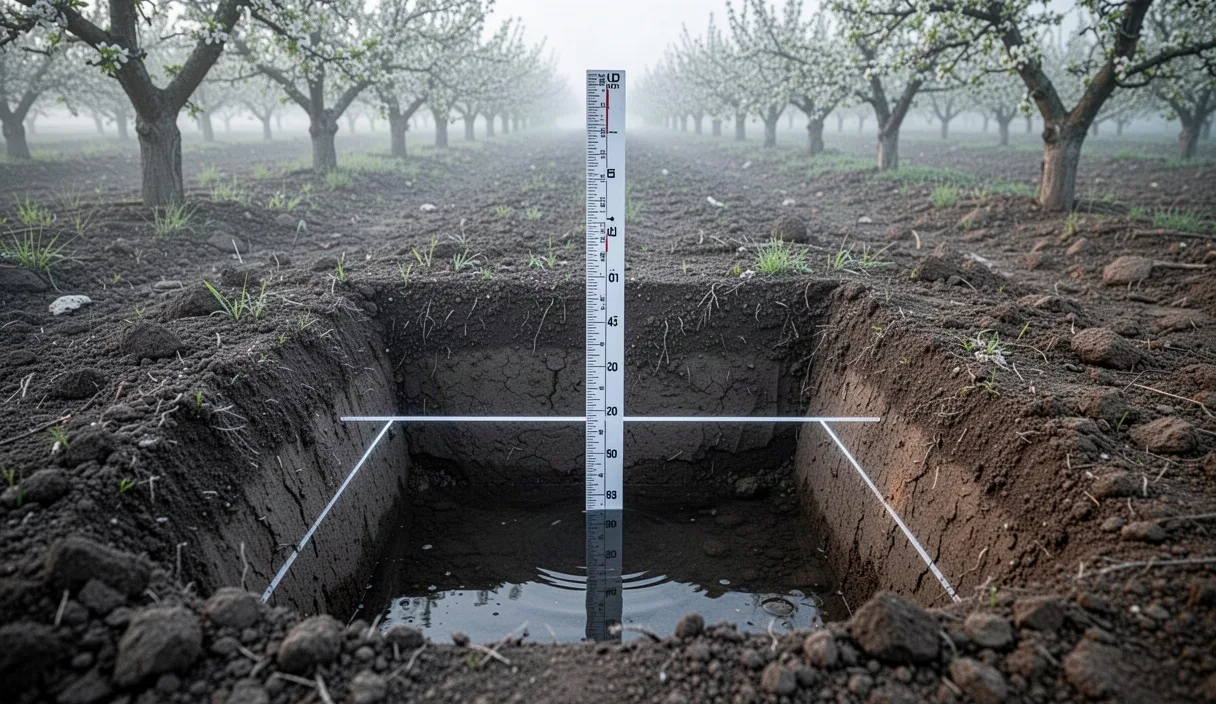
Sample the proposed orchard site for soil texture, hardpan layers, and drainage capacity. Perform percolation tests: if water drains at a rate slower than 2.5 centimeters per hour, subsoiling or the construction of raised planting berms is required prior to introducing either format. If soil chemistry requires adjustment, apply lime or sulfur at least six months before planting to allow pH stabilization throughout the top 30 centimeters of the profile.
Selecting Stock Format
Choose bare-root stock if planting operations can be completed strictly during the regional dormant window, if freight access is limited, or if capital must be conserved across high-acreage plantings. Choose container stock if planting dates must extend into late spring, if cold-storage staging facilities are unavailable on site, or if labor crews are small and require a flexible planting schedule.
Receiving and Handling Material
Upon delivery of bare-root stock, open shipping bundles immediately to inspect root moisture and stem cambium viability. If the cambium is green and root packaging is damp, re-close the packaging and move stock to cold storage at 2.0 to 3.5 degrees Celsius. If bare-root stock must be held without refrigeration for more than 48 hours, heel the bundles into a designated sawdust trench and saturate with water. For container stock, stage plants in a wind-sheltered area and verify that daily irrigation thoroughly wets the entire root core.
Field Installation Verification
Equip planting crews with root-pruning knives and depth gauges. Confirm that bare-root lateral roots are pruned only if broken or diseased, spread outward over a slight mound in the hole center, and set at correct depths relative to the graft union. For container stock, mandate that every root ball be scored along four vertical axes and across the bottom surface before placement into backfill. Irrigate all newly set trees with 15 to 25 liters of water within four hours of planting to settle soil and eliminate remaining air pockets.