 Verdant stock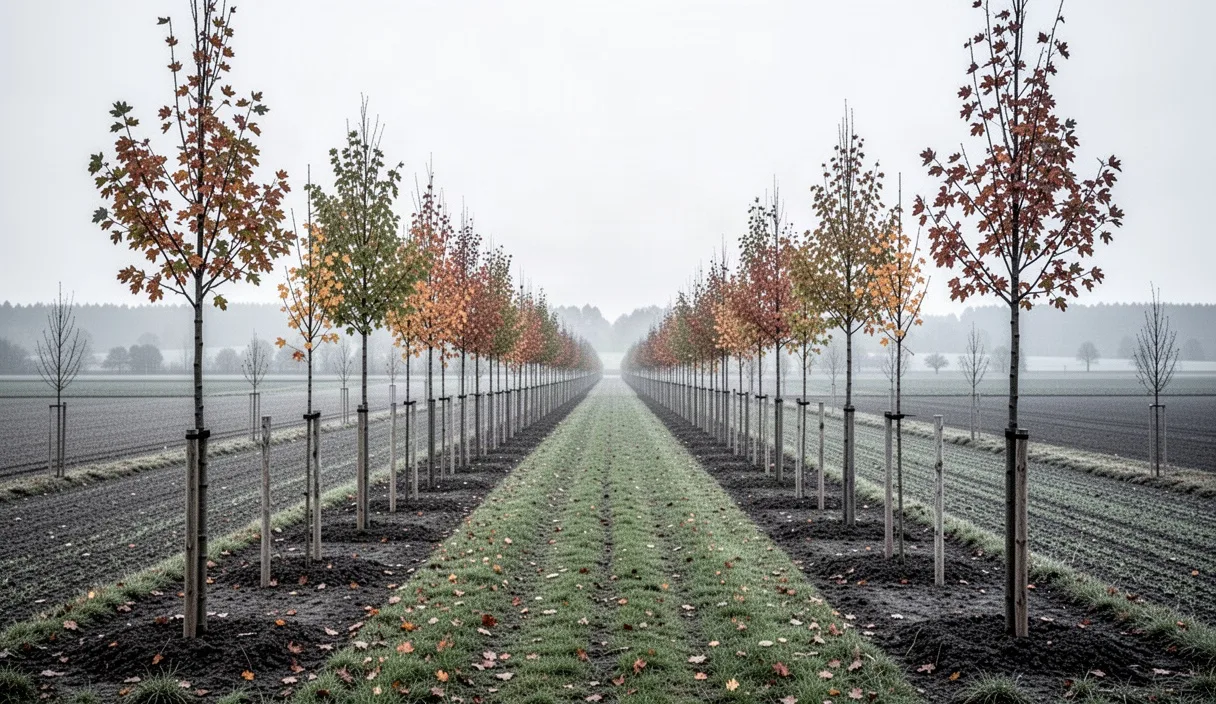

Windbreaks constructed from native bare-root or containerized seedlings serve as structural barriers that modify localized microclimates, reduce soil erosion, and protect sensitive agricultural plots or built infrastructure. Unlike ornamental shelterbelts that often incorporate exotic, fast-growing species with high water demands and short lifespans, native seedling stocks offer genetic adaptations to regional moisture limits, soil chemistry variations, and periodic pathogen outbreaks. Installing these systems requires accurate spatial planning, precise density calculations, and an understanding of fluid dynamics as wind interacts with biological barriers.
The aerodynamic performance of a living windbreak depends on cross-sectional geometry, overall height, length continuity, and internal porosity. When air streams hit a vegetative barrier, a portion passes directly through the foliage and branches, while the remainder is forced up and over the canopy. Balancing these two pathways prevents violent air recirculations on the downwind side. Treating a windbreak as an engineered biological asset ensures that planting configurations deliver predictable shelter zones across multiple decades of growth.
Porosity Targets for Gradual Wind Dissipation
Porosity describes the ratio of open space to solid vegetative volume within the barrier, commonly assessed visually as optical porosity. Solid structures such as masonry walls or dense, unpruned single-row conifer hedges stop airflow abruptly, creating a low-pressure vacuum directly behind the barrier. This low-pressure cell forces air cascading over the top to curl downward into high-velocity eddies, causing severe turbulence and stripping soil or damaging structures situated within four to six tree heights downwind.
Permeable barriers avoid extreme turbulence by allowing a controlled volume of air to bleed through the structure. This bleeding effect cushions the air being deflected over the crown, keeping the boundary layer separated and gently slowing downwind air mass movement. The optimal target for overall windbreak optical porosity across all seasons falls between 40 percent and 60 percent. At 45 percent to 55 percent porosity, wind speed reduction remains substantial while the sheltered zone extends outward over the greatest possible distance.
| Optical Porosity Range | Downwind Airflow Characteristics | Effective Shelter Distance | Typical Species Composition |
|---|---|---|---|
| 20 percent to 35 percent | Sharp immediate wind drop; rapid leeward downdrafts; severe micro-eddy turbulence | 5 to 8 times barrier height (5H to 8H) | Multi-row dense conifers (e.g., spruce or arborvitae planted tight) |
| 40 percent to 55 percent | Smooth displacement; minimal leeward turbulence; uniform downwind velocity gradient | 15 to 22 times barrier height (15H to 22H) | Mixed deciduous and pine canopy with stratified lower shrub row |
| 60 percent to 70 percent | Negligible leeward turbulence; lower relative speed reduction (roughly 25 to 35 percent drop) | 10 to 14 times barrier height (10H to 14H) | Open hardwood deciduous canopy without intermediate evergreen understory |
Maintaining winter porosity targets in areas with heavy seasonal winds or drifting snow requires specific vegetative combinations. Deciduous species lose their foliage in autumn, which increases their porosity from an average of 40 percent in summer to 65 percent or 75 percent in winter. Incorporating persistent native evergreens along the interior or downwind rows stabilizes the aerodynamic density, ensuring consistent winter resistance without over-densifying the cross-section.
Species Height Stratification Across Three Parallel Rows
A functional three-row windbreak relies on structural stratification. Arranging species by mature height creates an inclined ramp profile that guides oncoming winds upward without generating violent mechanical shearing at the canopy interface. Row positions are defined relative to the prevailing windward direction.
Row 1: The Windward Shrub Buffer
The row situated furthest upwind faces the full mechanical energy of seasonal gales and drifting snow. It should consist of tough, multi-stemmed native shrubs reaching mature heights between 1.5 and 3.5 meters. Dense branch architecture at ground level catches heavy snow drifts before they pile into the taller interior trees, preventing stem breakage. Recommended native options include American hazelnut (Corylus americana), red-osier dogwood (Cornus sericea), or western chokecherry (Prunus virginiana). Shrubs are spaced 1.0 to 1.5 meters apart within this row.
Row 2: The Core Canopy Layer
Positioned 4.0 to 5.0 meters downwind from the shrub line, the central row comprises the tallest native hardwood or conifer species suited to the site. These trees provide the structural backbone and set the ultimate shelterbelt height (designated as dimension H). Mature heights usually range from 12 to 24 meters. Bur oak (Quercus macrocarpa), green ash (Fraxinus pennsylvanica, where borer threats are absent), or ponderosa pine (Pinus ponderosa) serve this role. In-row spacing for these large trees should span 3.0 to 4.5 meters to give root plates adequate room to develop lateral stability.
Row 3: The Leeward Structural Anchor
The row furthest downwind stabilizes the cross-section, suppresses surface drafts that slip beneath the primary canopy, and regulates optical porosity. Medium-stature native evergreens or small trees reaching 6 to 12 meters are ideal here. Eastern redcedar (Juniperus virginiana), northern white-cedar (Thuja occidentalis), or serviceberry (Amelanchier alnifolia) fit this position. In-row spacing between 2.0 and 3.0 meters maintains low-level density even as the central hardwood trees self-prune their lower limbs over decades.
Distance Ratios for Protected Downwind Zones
Shelterbelt performance is calculated using the baseline metric H, which represents the height of the tallest mature row. Aerodynamic protection is not limited to the downwind (leeward) side of the planting; a modest compression zone also forms directly in front of the windward row.
Upwind protection extends over a distance of 2H to 5H. Within this zone, oncoming air decelerates as it approaches the static cushion of air resting against the vegetative face. Ground-level wind reductions upwind typically range from 10 percent to 20 percent. This modest protection helps prevent snow from scouring bare soil directly adjacent to the planting strip.
The leeward protected zone is substantially larger, spanning outward between 15H and 30H depending on barrier density, continuity, and slope. The zone breaks down into distinct microclimate regions:
- Zone of Maximum Reduction (2H to 8H): Wind speeds are lowered by 60 percent to 75 percent at canopy porosity targets of 45 percent to 50 percent. Evapotranspiration rates drop sharply, creating conditions well suited for water-sensitive crops, livestock yards, or structural heat conservation.
- Zone of Intermediate Protection (9H to 18H): Wind speeds are reduced by 30 percent to 50 percent. Airborne particulate deposition slows, snow settles evenly across open terrain rather than forming deep drifts, and soil detachment ceases.
- Zone of Attenuation (19H to 30H): Wind velocity steadily returns to 80 percent and then 100 percent of open-field velocity. Protection beyond 25H remains minor and primarily affects soil surface moisture retention rather than mechanical wind force.
For example, a windbreak reaching a mature central row height of 14 meters provides its peak protection over an interval extending from 28 meters to 112 meters downwind. The total measurable influence of the barrier continues outward to approximately 280 to 350 meters before open wind patterns fully re-establish.
Site Preparation for High-Density Perimeter Strips
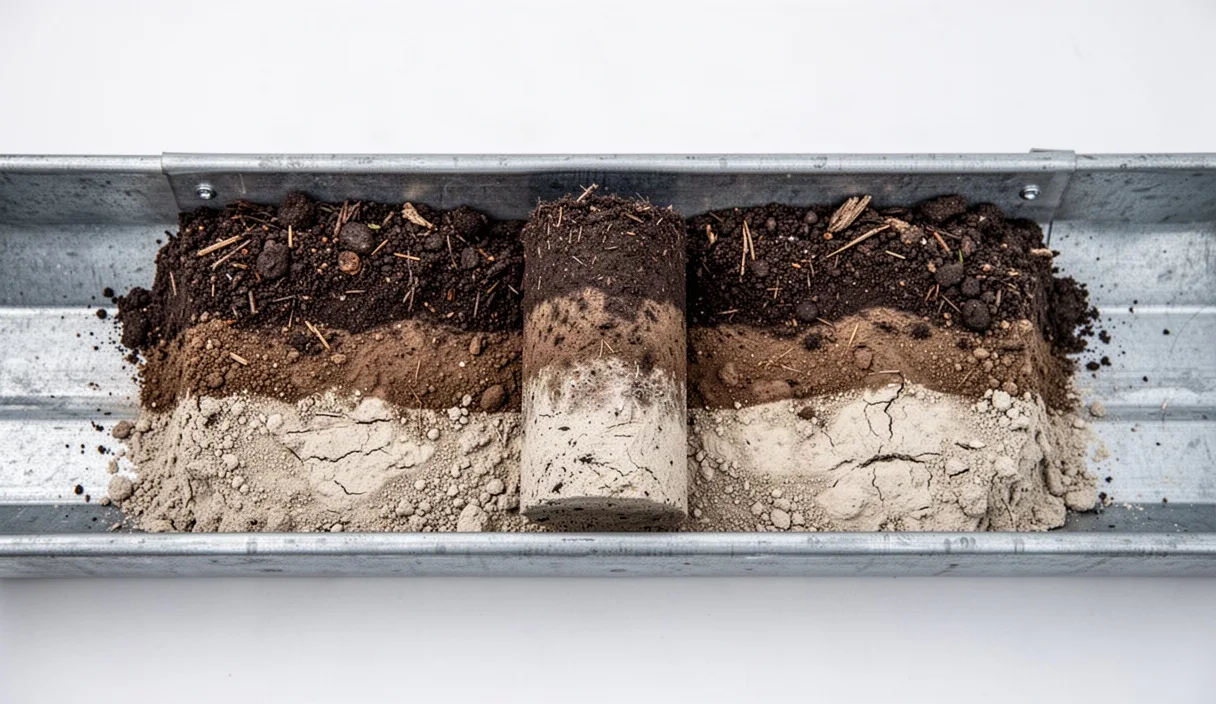
Native bare-root stock possesses limited initial root mass and needs prompt hydraulic integration with the surrounding soil profile. Soil preparation must eliminate root competition from perennial turfgrasses and loosen compacted agricultural plow pans before planting begins.
Site operations should start during the late summer or early autumn preceding spring installation. Ripping or subsoiling along the intended row centerlines shatters hardpan layers created by livestock or field machinery. The subsoiler shank must run to a depth of 45 to 60 centimeters when soils are moderately dry; dragging a ripper through saturated soil produces internal smearing rather than the intended fracture patterns.
Secondary tillage requires cultivating a strip 1.5 to 2.0 meters wide for each row. Disk harrowing or rototilling breaks up clods and levels the planting bed, ensuring that small seedling root collars can be placed flush with natural grade. Surface soil samples must be collected across the strip to assess pH, electrical conductivity, and organic matter content. Native species adapted to local soils generally perform poorly when commercial mineral fertilizers are broadcast indiscriminately; adding high-nitrogen fertilizers stimulates weeds without aiding root extension in slow-growing native perennials.
Row lines must follow prevailing windward topography accurately. Across slopes exceeding five percent, planting rows should trace contour intervals to prevent rainfall runoff from eroding the cultivated ground. Equilateral triangle layouts, where plants in adjacent rows are offset diagonally rather than placed in square grids, block line-of-sight gaps and prevent air currents from jetting through open corridors.
Weed Suppression Strategies During the First Two Years
The initial 24 months determine the survival rate of native stock. Non-native pasture species, cool-season grasses such as smooth brome or tall fescue, and aggressive broadleaf weeds will quickly outcompete young seedlings for shallow moisture within the top 30 centimeters of soil.
Suppression requires combining mechanical, physical, and targeted cultural barriers throughout the perimeter footprint. The following actions control competition:
- Laying Woven Polypropylene Fabric: Installing a continuous ultraviolet-stabilized fabric barrier (110 to 130 grams per square meter) along each planting line stops weed germination and conserves subsurface capillary moisture. Secure the material using 20-centimeter heavy-gauge steel staples placed every 1.0 meter along the margins. Cut an envelope-style X-slit no larger than 12 centimeters across for each seedling, tucking the flaps inward around the root collar.
- Coarse Arborescent Wood Chip Application: Where fabric is unsuitable due to slope or soil type, apply an 8 to 10 centimeter blanket of aged, coarse wood chips across a 1.0-meter radius around each plant. Fine sawdust or fresh uncomposted wood shavings should not be used, as they bind surface nitrogen and pack into hydrophobic mats. Keep the mulch pulled back 5 centimeters from the seedling stem to avoid fungal collar rot and rodent gnawing.
- Mowing Inter-Row Corridors: Maintain the 3.5 to 5.0 meter spaces between rows with a sharp flail or rotary mower. Keeping intermediate turf or native cover crops cut to a height of 10 to 15 centimeters prevents cool-season plants from setting seed heads, increases light penetration to the lower lateral branches of the shrubs, and removes cover that harbors meadow voles.
- Direct Spot Cultivation: Weeds emerging through the seedling slits in fabric mulches must be pulled by hand during spring and mid-summer before their root systems wrap around the native stock. Powered weed trimmers should not be run near young bare-root stems; thin bark on native species is easily girdled by monofilament line, which can kill the seedling within a single growing season.
Common Mistakes
A frequent error is establishing a single-row shelterbelt using a single species. Monoculture rows are vulnerable to species-specific pests, such as the emerald ash borer or pine bark beetles. If a pest infests the barrier, the entire windbreak can fail simultaneously, leaving the site exposed. Designing multi-row mixes provides insurance; if one species suffers crown thinning or mortality, surrounding trees and shrubs maintain structural continuity.
Leaving gaps for access roads or utility gates without an aerodynamic baffle is another common oversight. Wind hitting an unbroken tree line builds lateral pressure until it finds an opening. When air squeezes through an unshielded gate gap, velocity increases sharply due to the Venturi effect. These localized wind jets can blow out greenhouse panels, unroof outbuildings, or scour soil behind the gap. Access tracks should cut through the windbreak at an oblique 45-degree angle or include an overlapping secondary windbreak strip that shields the road opening.
Planting seedlings too close to existing fences or field edges also causes chronic issues. Trees installed within two meters of a fence line will engulf wires as their trunks expand, complicating fence maintenance and causing trunk wounds that invite heartwood rot. Furthermore, planting rows directly under overhead utility lines guarantees heavy crown topping by utility operators later, which destroys the vertical height stratification needed for wind deflection.
Next Steps for Implementation
Begin by locating regional wind direction data from the nearest meteorological station or airport reporting facility. Identify seasonal variations: winter storms frequently blow from the north-northwest, whereas summer drying winds often arrive from the south or southwest. Align the long axis of the windbreak perpendicular to the primary wind vector of concern; a deviation of up to 30 degrees will still maintain acceptable efficiency.
Contact local state forestry nurseries or county conservation districts six to nine months ahead of your planting date. Native bare-root stock sells out early, and securing ecotypes adapted to your specific precipitation zone is critical. Order 10 percent to 15 percent more seedlings than field measurements require; these extra plants should be set in an on-site nursery holding bed to replace any field specimens that fail during the first growing season.
When windbreak installations involve complex topography, ridge saddles, structural protection near residences, or drainage swales, consult a professional conservation engineer or certified professional forester. These specialists can run wind models and verify that your row positions will not inadvertently dump snowdrifts across critical roadways or active drainage channels.