 Verdant stock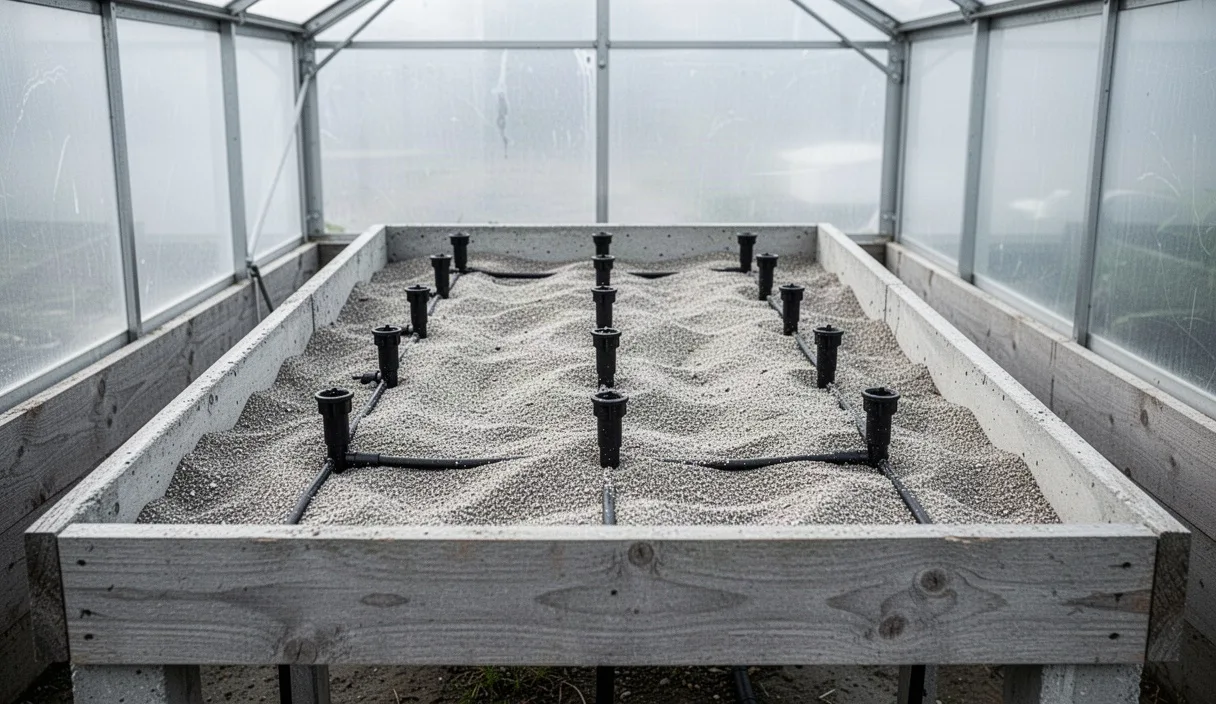

Propagation sandbeds provide an aerated, free-draining substrate well suited for rooting softwood cuttings and germinating slow-growing woody perennials. The mineral matrix offers stable physical support and allows for clean root extraction during transplanting. However, because sand particles lack the complex biological buffers found in compost-based or field-soil systems, unmanaged sandbeds function as open channels for waterborne and contact pathogens. When moisture levels remain high and bench temperatures hover within standard greenhouse ranges, an untreated bed can harbor pathogen populations that transfer across multiple plant cohorts.
Preventing cross-contamination between crop cycles requires a disciplined hygiene protocol. Sanitation in sand propagation encompasses the eradication of fungal spores, oomycetes, and bacterial biofilms from both the mineral substrate and the associated physical infrastructure. This document outlines the operational tolerances, chemical parameters, and verification procedures necessary to maintain a clean rooting environment throughout successive production runs.
Causal Agents of Damping-Off in Seedling Trays and Beds
Damping-off is a collective symptom complex caused by several distinct soilborne organisms that attack seeds, emerging hypocotyls, and unlignified stem tissues. In propagation sandbeds, these organisms survive between crops within microscopic organic fragments, sloughed root tissue, and sand grain crevices. Identifying the specific pathogen genus is essential because their physiological tolerances, optimal sporulation temperatures, and chemical vulnerabilities differ substantially.
The primary causal organisms encountered in coarse mineral propagation media include:
- Pythium species: Motile oomycetes, primarily Pythium ultimum and Pythium aphanidermatum. They thrive in saturated conditions where free water permits their flagellated zoospores to swim toward root exudates. Infection results in water-soaked, black lesions at the sand line, followed by rapid tissue collapse. P. ultimum causes severe damage between 12 and 20 degrees Celsius, whereas P. aphanidermatum accelerates when media temperatures exceed 27 degrees Celsius.
- Rhizoctonia solani: A sterile fungus that survives as durable sclerotia and mycelial mats. Unlike Pythium, Rhizoctonia does not produce motile aquatic spores and can infect plants in moderately dry sandbeds. Symptoms present as sunken, reddish-brown, dry cankers on the lower stem. Mycelial webbing is frequently visible across the sand surface between adjacent cuttings under high relative humidity.
- Fusarium species: Fungal pathogens such as Fusarium oxysporum that produce both microconidia and resilient chlamydospores. These species penetrate vascular bundles, inducing unilateral wilting, stunting, and vascular discoloration before visible decay occurs at the substrate level. Chlamydospores can remain viable within dry sand grains for several years.
- Phytophthora species: Oomycetes including Phytophthora cryptogea and Phytophthora cactorum that produce long-lived oospores alongside zoospores. These pathogens cause crown rot and basal stem necrosis, commonly entering sandbeds via contaminated recirculated water or unwashed propagation flats.
The table below summarizes the operational thresholds and diagnostic indicators for these primary agents in sand media:
| Pathogen | Organism Type | Peak Activity Temp | Moisture Requirement | Primary Symptom |
|---|---|---|---|---|
| Pythium ultimum | Oomycete | 12 to 20 deg C | Saturated (>85% pore volume) | Wet, black, slippery stem collapse |
| Rhizoctonia solani | Basidiomycete fungus | 22 to 28 deg C | Moderate (40% to 65% pore volume) | Dry, wirestem-like brown lesions |
| Fusarium oxysporum | Ascomycete fungus | 24 to 30 deg C | Variable (survives desiccation) | Vascular browning and stem wilting |
| Phytophthora cactorum | Oomycete | 18 to 24 deg C | High (>75% pore volume) | Basal rot spreading into central stem |
Target Temperatures and Hold Times for Medium Pasteurization
Thermal pasteurization is the most reliable non-chemical method for clearing propagation sand of pathogenic fungi, nematodes, and dormant weed seeds. Complete biological sterilization is counterproductive; temperatures exceeding 82 degrees Celsius alter sand mineral chemistry, release phytotoxic levels of soluble manganese, and volatilize organic nitrogen into free ammonia gas. Aerated steam pasteurization controls pathogenic organisms while preserving heat-tolerant saprophytes that occupy ecological niches and suppress reinvasion.
The target baseline for aerated steam pasteurization of propagation sand is maintaining a core temperature of 60 to 71 degrees Celsius across the entire bed volume for a minimum hold time of 30 continuous minutes. This duration and temperature threshold inactivates non-spore-forming bacterial pathogens, oomycete zoospores and oospores, fungal mycelium, and plant-digestive balance nematodes. If Fusarium chlamydospores or tobacco mosaic virus are suspected from a previous run, the target temperature must be raised to 77 degrees Celsius for 30 minutes, without crossing the 82-degree limit.
Execute bed pasteurization according to the following operational sequence:
- Moisture adjustment: Pre-moisten the sand until it reaches roughly 50% of its water-holding capacity. Completely dry sand insulates against heat distribution, while waterlogged sand requires excessive energy to heat and creates cold spots where water pools. The sand should hold together in a loose ball when squeezed, without dripping water.
- Perforated pipe deployment: Insert or uncover perforated distribution headers positioned 5 to 10 centimeters above the bed floor, spaced no more than 30 centimeters apart to ensure overlapping steam plumes.
- Tarping and sealing: Cover the sandbed with a heat-resistant, high-density polyethylene or silicone-coated steam tarp. Secure the edges along bench sides with chain weights, sand snakes, or continuous mechanical clamps to prevent pressure loss.
- Thermal monitoring: Insert calibrated thermocouple data probes at the lowest bed corners, the center point, and directly beneath the top surface. The target timer begins only when the coldest probe registers 60 degrees Celsius.
- Post-treatment cooling: Turn off steam injection after the 30-minute hold window. Allow the tarp to remain in place until the media cools below 40 degrees Celsius to prevent airborne spore contamination before planting.
Surface Sterilization Protocols for Tools and Irrigation Lines
Sanitizing the sandbed substrate is futile if bench frames, cutting shears, automated mist nozzles, and delivery lines introduce fresh inoculum. Organic debris, mineral scale from hard water, and bacterial biofilms actively deactivate many chemical disinfectants. A dual-action approach combining mechanical descaling with chemical sanitization is required for structural surfaces and irrigation equipment.
Different sanitizing chemistries suit different components of the propagation system:
- Quaternary Ammonium Compounds: Formulations based on alkyl dimethyl benzyl ammonium chloride are suitable for cleaning plastic propagation flats, aluminum bench frames, and concrete walkways. Use at a concentration of 400 to 800 parts per million of active ingredient. Surfaces must remain wet for a minimum contact time of 10 minutes. These compounds exhibit residual action on non-porous surfaces but are quickly inactivated by residual sand or organic matter.
- Peracetic Acid and Hydrogen Dioxide Mixtures: Broad-spectrum sanitizers that decompose into water, oxygen, and acetic acid, leaving zero phytotoxic residue. Mix at 0.2% to 0.5% volume-to-volume for tool dipping and bench spraying. For shock treatment of mist supply lines, inject a 1.0% solution, let it dwell within the lines for 4 hours, and then flush thoroughly with potable water to clear suspended biofilms.
- Sodium Hypochlorite: Readily available for general tool dipping, prepared at a dilution yielding 500 to 1000 parts per million available chlorine. The solution must be buffered to a pH between 6.5 and 7.5; alkaline water reduces its oxidative efficacy, while acidic conditions produce dangerous chlorine gas. Tools require a 2-minute immersion. Mix fresh batches every 4 hours, as hypochlorite degrades rapidly when exposed to light and organic loads.
Mist nozzles require individual maintenance before each propagation run. Disassemble brass or polyvinyl nozzles and soak them in a 5% sulfamic or citric acid bath for 60 minutes to dissolve calcium carbonate and iron scale. Rinse with clean water, inspect orifices under a 10x hand lens for erosion or clogging, and immerse in a peracetic acid solution for 15 minutes prior to reinstallation.
Air Circulation Baselines to Inhibit Fungal Colonization
Static, humid air above misted sandbeds creates an unbroken boundary layer around plant stems, promoting the germination of airborne spores such as Botrytis cinerea and aerial Rhizoctonia. While cuttings require high relative humidity to minimize transpiration prior to root initiation, the surrounding air must remain in controlled motion. Air movement disrupts microclimates where relative humidity hits saturation at leaf surfaces, facilitating transpiration-driven calcium uptake without dehydrating unrooted foliage.
Maintain continuous horizontal air movement across the propagation surface at a velocity between 0.2 and 0.5 meters per second (40 to 100 feet per minute). Velocities below 0.2 meters per second allow stagnant moisture pockets to form between closely spaced cuttings. Velocities above 0.6 meters per second strip the boundary layer entirely, causing stomatal closure, desiccation, and tip abortion before root primordia develop.
Configure greenhouse air distribution using small, continuous-duty horizontal airflow (HAF) fans mounted 1.0 to 1.5 meters above the sand surface. Direct the airflow down the length of the benches in an alternating racetrack pattern. Synchronize HAF fans with automated mist cycles: fans should remain operating during mist application unless physical droplet displacement is observed. If the bench relies on localized plastic sweat tents, install internal circulation manifolds or miniature axial fans to prevent condensation accumulation on the underside of the plastic, which can drip directly onto plant crowns.
Record-Keeping for Lot Contamination Incidents
When damping-off occurs, thorough documentation allows growers to isolate the source, evaluate sanitation lapses, and verify whether the contamination stems from stock plants, incoming water, or substrate carryover. Clear historical records prevent recurring crop losses and establish accountability within the nursery production team.
Log each contamination event on an internal Incident Log containing the following mandatory fields:
- Date of observation: The exact date and production week when visual symptoms first appeared.
- Location coordinates: Greenhouse house number, bench identifier, and specific bed quadrant (for example, Bench 4, North Quadrant).
- Crop lineage: Plant botanical name, cultivar, stock plant block origin, cutting harvest date, and individual batch or lot number.
- Environmental conditions: Median sandbed root-zone temperature, greenhouse ambient day/night temperature, and mist cycle frequency over the preceding 72 hours.
- Symptom presentation: Specific visual signs, such as root rot, dry stem canker, foliar collapse, or surface hyphae.
- Sanitation history: Date of last steam pasteurization, target temperature registered, total hold duration, and the operator on duty.
- Laboratory results: Diagnostic lab findings or in-house lateral flow strip test results confirming the causal genus.
When an active pathogen patch is verified, implement an immediate containment boundary. Mark a perimeter extending 0.5 meters beyond all visibly affected cuttings. Remove the infected plants along with the surrounding sand to a depth of at least 15 centimeters, placing the material directly into sealed disposal bins within the bed to avoid dropping infested sand grains across clean zones. Drench the excavated area and surrounding buffer zone with an appropriate labeled chemical fungicide or biofungicide based on laboratory confirmation, and record the application details directly onto the incident tracking sheet.
Common Mistakes
Operational oversights can undermine sanitation protocols, allowing pathogens to persist despite pasteurization and chemical treatments. Common pitfalls include:
- Pasteurizing completely dry sand: Dry air is a poor conductor of heat. Applying steam to dry sand results in uneven channeling, leaving cold pockets where fungal resting structures survive unharmed.
- Overheating the substrate: Allowing sandbed pasteurization temperatures to exceed 82 degrees Celsius can cause manganese phytotoxicity and destroy non-pathogenic competitor organisms, leaving the sandbed vulnerable to rapid reinvasion.
- Applying disinfectants over organic residues: Applying chemical sanitizers directly over sand, algae, or plant leaves without mechanical pre-cleaning deactivates the chemicals before they contact target surfaces.
- Ignoring drainage layers: Sanitizing the top 10 centimeters of sand while neglecting the underlying gravel or tile drainage layer allows waterborne zoospores to migrate upward through capillary action during mist cycles.
- Failing to account for water temperature: Using cold well water (below 10 degrees Celsius) to dilute sanitizing chemicals can lower chemical reaction rates and reduce disinfection efficiency.
Practical Next Steps
Begin by auditing your current propagation sandbeds before starting the next production cycle. Inspect heating manifolds, steam delivery pipes, and mechanical tarps for tears or blocked distribution holes. Review pressure regulators and verify that all temperature data loggers are calibrated using a zero-point ice water bath and boiling water test.
Next, clear all residual plant materials from empty sandbeds. Wash down bench walls, perimeter walks, and mist piping with a pressurized water wash, followed by a registered surface disinfectant. Re-level the sand, adjust the medium moisture content, and conduct a full pasteurization cycle, recording temperature readings at multiple bed locations to ensure proper heat distribution. If persistent root rot issues have occurred in past crops, send substrate and water samples to a certified agricultural diagnostic laboratory to confirm that your target pathogens match the parameters outlined in your sanitation plan.